



Saving Your Natural Teeth
Dentist Westampton
Root canal therapy is the act of treating the center of an inflamed tooth. Inside every tooth is a soft substance of nerves, blood vessels, and connective tissue that keeps it nourished, healthy, and strong. Sometimes, due to the decay of enamel around it, the pulp can become infected with bacteria.
Symptoms of a pulp infection include visible swelling of the tooth, a major sensitivity to temperature, and/or pain in the tooth and gums. If you’re experiencing any of these symptoms, contact us at Almore Dental Studio for a consultation.
If you have an infected tooth pulp, the way to treat it is a root canal. A root canal involves a dentist removing the infected tooth pulp from within the tooth chamber, and cleaning the canals with a disinfecting solution. We will provide local anesthesia or sedation to ensure your comfort during the procedure.
The last step before you leave the office is that we will place a temporary filling over the tooth we treated until the full restoration is complete. Your tooth will likely be sensitive for the first few days, and we’ll advise you on medications to help relieve the symptoms. Avoid using the treated tooth when eating until you’ve had a full restoration. If a problem occurs, contact Almore Dental Studio immediately.
If you want to preserve your tooth, root canal therapy can help. Contact us today for a consultation with Dr. Moreta.
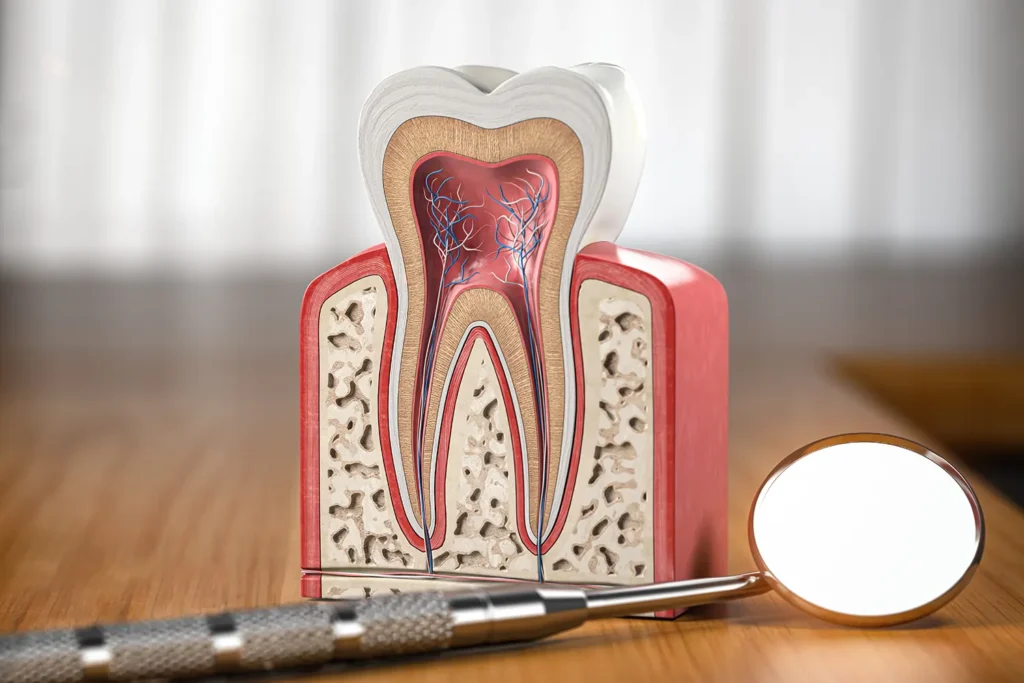
Benefits of Root Canal Treatment
Pain Relief & Infection Control
A root canal significantly reduces or completely eliminates dental pain caused by deep decay, infection, or inflammation of the tooth pulp. By removing the infected tissue inside the tooth and cleaning the canals thoroughly, the procedure prevents the infection from spreading to surrounding areas such as the jawbone, gums, or neighboring teeth. This ensures long-term oral health and protects you from more serious complications in the future.
Saves Your Natural Tooth
Instead of extracting the damaged tooth, a root canal allows it to be preserved and restored. Keeping your natural tooth helps maintain the natural alignment of your bite and prevents potential shifting of adjacent teeth, which can lead to chewing difficulties or jaw problems. Retaining your original tooth is almost always better than replacing it with artificial alternatives, making root canal therapy a highly valuable, tooth-saving procedure.
Restores Chewing Efficiency & Tooth Strength
After the infected area is treated and the tooth is restored with a crown, you can enjoy normal chewing and biting without discomfort. The final crown provides strength and stability, ensuring the treated tooth can function for many years. This restoration also protects the tooth from fractures, damage, and sensitivity, allowing you to maintain a confident, pain-free bite in your daily activities.

Root Canal Treatment Process

Examination, Diagnosis & Local Anesthesia
The dentist begins with a thorough clinical examination and X-rays to evaluate the extent of infection and assess the structure of the tooth root. Once root canal therapy is confirmed as the best treatment option, local anesthesia is administered to ensure a comfortable, pain-free experience. A protective dental dam is placed to isolate the tooth, and a small opening is made to access the infected pulp chamber.

Removal of Infection, Cleaning & Shaping of Canals
Using advanced rotary instruments and disinfectants, the dentist carefully removes the infected pulp tissues from inside the canals. The canals are then widened and shaped to allow thorough cleaning and sterilization. This step is crucial for eliminating bacteria, removing debris, and preventing the recurrence of infection. The dentist may place medication inside the tooth if the infection is severe, allowing the tooth to heal properly before sealing.

Filling, Sealing & Final Restoration
Once the canals are fully cleaned and shaped, they are filled with a biocompatible material called gutta-percha that seals the space tightly to prevent future bacterial contamination. The access opening is then sealed with a temporary or permanent filling. In most cases, a dental crown is recommended to restore full strength and function, as root canal–treated teeth can become more brittle over time. The final crown restores the tooth’s appearance, durability, and long-term health.

Frequently Asked Questions
Is a root canal painful?
Contrary to popular belief, modern root canal treatment is designed to be comfortable and is usually no more uncomfortable than a regular filling. Thanks to improved anesthesia and advanced dental technology, patients typically experience little to no pain during the procedure. After treatment, mild soreness or sensitivity may occur for a short period, but this can be managed easily with over-the-counter pain relief and usually subsides within a few days.
How long does a root canal take, and is more than one visit needed?
A typical root canal can take between 45 and 90 minutes depending on the complexity of the tooth, the number of canals, and the severity of the infection. Some cases can be completed in a single visit, while others may require two or more appointments, especially if the tooth is severely infected or needs additional time for healing. Your dentist will evaluate your condition and determine the ideal treatment schedule for the best outcome.
Why is a dental crown recommended after a root canal?
Following a root canal, the tooth loses its blood supply, making it more prone to cracking or breaking under pressure. A dental crown provides a strong, protective cover that restores the tooth’s full function and prevents structural damage. While not all teeth require crowns, molars and heavily restored teeth almost always do to ensure long-lasting results. Investing in a crown helps extend the lifespan of your treated tooth and protects it for many years.
